
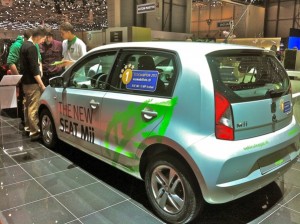
 The Geneva Auto Show wraps up this Sunday, and auto journalists are already asking what the show says about the future of cars, specifically “green” vehicles. Is the auto industry making progress in hybrids and electric cars, and will people buy them when they hit the market?
There is an odd disconnect between what people involved with the show and the auto industry are saying and the reality at the auto show. In a piece for the New York Times, writer Christopher F. Schuetze highlights the dissonance at the show, pointing out that only 10 percent of the cars at the show are eco-friendly and then quoting politicians and the president of the Geneva Auto Show who praise the auto industry’s integration of green technology. 10 percent is hardly complete integration, especially at an auto show meant to show the best and latest in automotive technology.
Unfortunately, there is a good reason why the auto industry is praising green technology while quietly relegating electric car technology to the concepts. The truth is that the auto industry still relies too much on big car sales, cars that scream “real man” in their advertising. The auto industry will never move past gas-guzzlers to electric and hybrid cars until they wean themselves off of this outdated idea of a manly car and learn how to properly market green cars.
No matter what kind of car you might be looking for, Approved Loan Store wants to help YOU! From hybrid compacts to trucks and minivans, we will work with you to get a car you want at terms you can afford! Get started today by filling out our secure online auto loan application here, and for more auto news and buying tips, like Approved Loan Store on Facebook, follow Approved Loan Store on Twitter, and subscribe to Approved Loan Store on YouTube!
 Vehicles are more fuel efficient than ever. The average fuel economy of the US light-duty fleet has seen a 40 percent improvement in forty years, and every year, automakers are making ambitious goals of cutting vehicle weight or pushing their hybrid and electric models. These efforts might be undercut, however, by poor driving habits.
 For a long time, Kia has been considered a scrappy underdog in the U.S. auto market. The brand is known for value rather than flashy designs, and looking over the top selling cars of the past few years, it would seem that flash is winning out. Kia didn’t break the top 10 best-selling cars for 2010, 2011, or 2012, and while Kia won a decent number of design awards in 2012, it isn’t a brand that typically makes headlines.
 In an effort to match their 2012 sales, Toyota is offering
  At the end of January, GM announced that they would be
  Auto industry journalists got the chance to show their snarky streak this week in response to Ed Whitacre’s book, American Turnaround: Reinventing AT&T and GM and the Way We Do Business in the USA. To say that some people are skeptical of Whitacre’s grand claims is being charitable.
 In an effort to lessen their environmental impact, Ford has pledged to reduce the waste produced per vehicle by
  Hundreds of thousands of vehicles were destroyed in Super Storm Sandy back in October including a substantial amount of new inventory. A question that people are starting to ask is what automakers will do with all these cars, seeing as they are unfit to sell, and Chevrolet is stepping up to make the best out of a bad situation.
 The new 2013 models are here, and while conventional wisdom would suggest holding out on buying until any kinks are worked out, a new study suggests that car shoppers might want to buy now.